CD vs High-Yield Savings Calculator
Choosing between a certificate of deposit and a high-yield savings account often comes down to more than just comparing advertised rates. This guide walks through the key variables that separate these two products, so you can run your own side-by-side comparison and pick the option that actually fits your situation.
How a CD and High-Yield Savings Account Differ
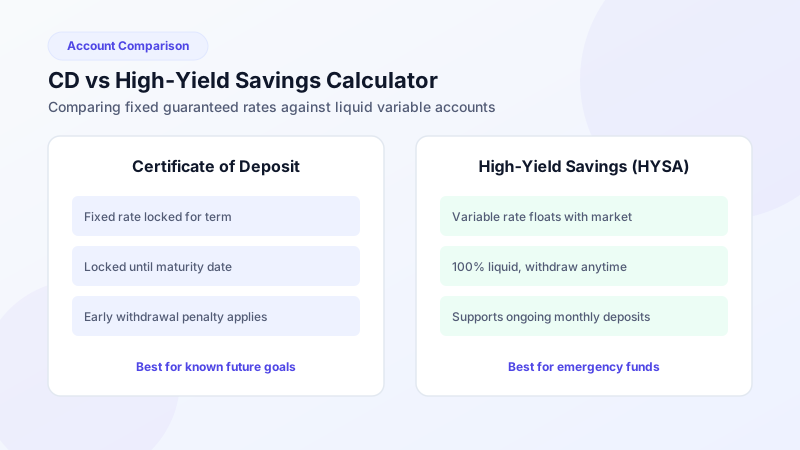
A CD locks your money away for a fixed term at a guaranteed rate, while a high-yield savings account, often abbreviated HYSA, keeps your funds fully accessible at a rate that can change at any time. This core difference, fixed versus flexible, shapes nearly every other comparison point between the two products.
CDs typically reward that lack of flexibility with a slightly higher guaranteed rate, especially during periods when rates are expected to fall. HYSAs, by contrast, offer no such lock-in but also carry no penalty for withdrawing funds whenever you need them.
How to Compare the Starting Deposit in Both Accounts
Both account types calculate earnings based on your principal, so start any comparison with an identical deposit amount for a fair test. If you’re depositing $10,000, run that same figure through both a CD calculation and a savings account projection using each product’s respective rate.
Keep in mind that some CDs require a minimum deposit to unlock their advertised rate, while most HYSAs have low or no minimum requirements at all.
How Interest Rates Affect the Projected Balance
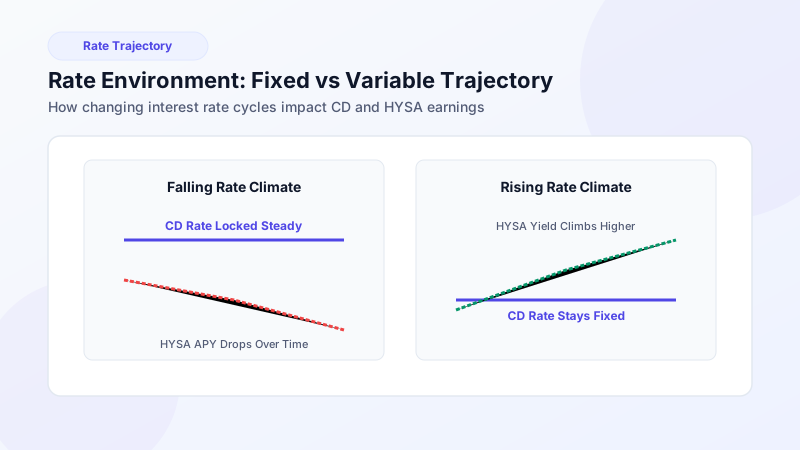
The interest rate, or more precisely the APY, drives the bulk of the difference in projected outcomes. CDs often advertise a fixed rate locked for the entire term, while HYSA rates are variable and can rise or fall with broader market conditions throughout your holding period.
| Feature | CD | High-Yield Savings |
|---|---|---|
| Rate type | Fixed for term | Variable |
| Access to funds | Locked until maturity | Anytime |
| Typical rate advantage | Often higher during falling-rate periods | Often competitive or higher during rising-rate periods |
How CD Terms Change the Comparison
A CD’s term length matters enormously for this comparison. A short-term CD locks in a rate for just a few months, limiting your exposure if rates rise elsewhere, while a longer CD term means you’re committed to that same rate even if better opportunities appear later.
A HYSA carries no such commitment, meaning its rate could rise above your CD’s locked rate at some point during the term, or it could fall below it instead. This uncertainty is the fundamental trade-off between the two products.
Why Liquidity Matters When Comparing the Two Options
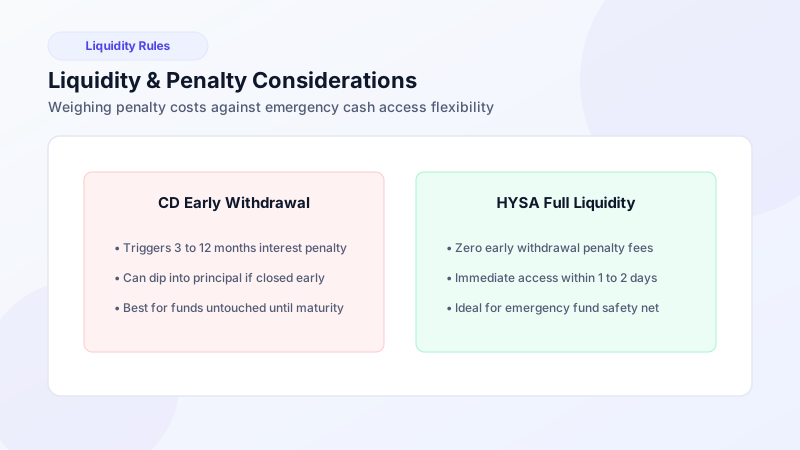
Liquidity, meaning how easily you can access your money without penalty, strongly favors the high-yield savings account. If an emergency arises, HYSA funds are typically available within a day or two with no penalty whatsoever, while breaking a CD early usually triggers an early withdrawal penalty that eats into your earned interest.
This makes HYSAs generally better suited for emergency funds, while CDs work better for money you’re confident you won’t need until a specific future date.
How Monthly Contributions Change a Savings Account Projection
Unlike a CD, which typically accepts one lump-sum deposit at opening, a high-yield savings account allows ongoing contributions throughout the term. If you plan to add money regularly, a savings account projection needs to account for these additional deposits, which a simple CD calculation doesn’t need to consider since CDs are generally closed to further deposits after opening.
How Early CD Withdrawal Rules Affect the Calculation
If there’s a reasonable chance you’ll need the money before your CD’s maturity date, factor in the potential early withdrawal penalty when comparing projected returns. This penalty, often expressed as a number of months’ worth of interest, can significantly reduce or even eliminate a CD’s rate advantage if you’re forced to withdraw early.
| Scenario | CD Outcome | HYSA Outcome |
|---|---|---|
| Funds untouched until maturity | Full advertised return | Full accrued return |
| Emergency withdrawal needed | Penalty reduces earnings | No penalty, full access |
How to Compare Interest Earnings Over the Same Time Period
For an accurate comparison, calculate projected earnings over an identical time period for both products. If comparing a one-year CD against a HYSA, project the savings account balance forward one year using its current rate, acknowledging that this rate could change during that window while the CD rate stays fixed.
Which Variables to Enter Into a CD vs Savings Calculator
A thorough CD vs high-yield savings calculator needs several inputs: your starting deposit, the CD’s fixed APY and term, the HYSA’s current APY, any planned additional contributions to the savings account, and your realistic likelihood of needing early access to the funds. Leaving out any of these variables skews the comparison toward an incomplete picture.
Conclusion: Comparing Projected Returns From CDs and High-Yield Savings
Neither product is universally better. A CD suits money you won’t need until a known future date and want locked at a guaranteed rate, while a high-yield savings account suits funds you want growing but still accessible on short notice. Running both scenarios through the same starting deposit and time period gives you the clearest picture of which option truly fits your goals. This article is educational and not personalized financial advice.
Ready to Calculate Your CD Returns?
Use our free CD Calculator to model your deposit, APY, and interest compounding instantly.
Try the CD Calculator