CD Calculator With Taxes: Calculate Your After-Tax Return
Earning interest on a certificate of deposit feels great until tax season arrives and a portion of those earnings disappears. This guide explains how taxes interact with CD interest and walks through calculating a realistic after-tax return so your expectations match reality.
Why Taxes Matter When Estimating CD Earnings
Many savers calculate their expected CD earnings based purely on the advertised rate, forgetting that taxes will claim a portion of that interest. Since CD interest counts as taxable income in most cases, ignoring this factor means overestimating how much you’ll actually keep.
Understanding your after-tax return upfront helps you compare CDs against other investment options more honestly, since some alternatives receive different tax treatment entirely.
What Type of Income CD Interest Creates
CD interest is generally treated as ordinary taxable interest income, similar to interest earned from a regular savings account. Banks typically issue a tax form reporting the interest paid during the year, and that amount gets added to your overall taxable income for the applicable tax year.
This differs from investment types like qualified dividends or long-term capital gains, which often receive more favorable tax rates. CD interest usually doesn’t get any special treatment.
How to Start With Your Pre-Tax CD Earnings
Begin any after-tax calculation with your pre-tax CD earnings, the raw dollar amount of interest the CD generates before any tax consideration. This figure comes directly from the standard CD interest calculation using principal, rate, term, and compounding frequency.
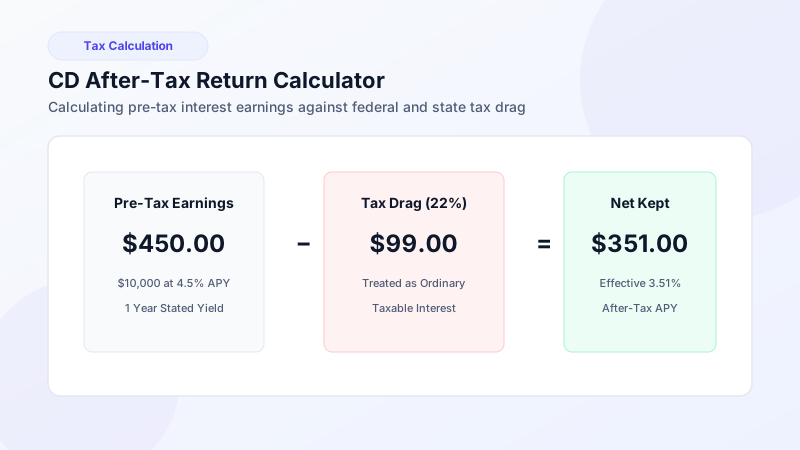
For example, if a $10,000 CD at 4.5% APY earns $450 in a year, that $450 figure represents your starting point before applying any tax adjustment.
How a Tax Rate Changes Your Net Interest
Once you know your pre-tax earnings, apply your applicable tax rate to estimate the after-tax result. Multiply the pre-tax interest by (1 minus your tax rate) to find what you keep.
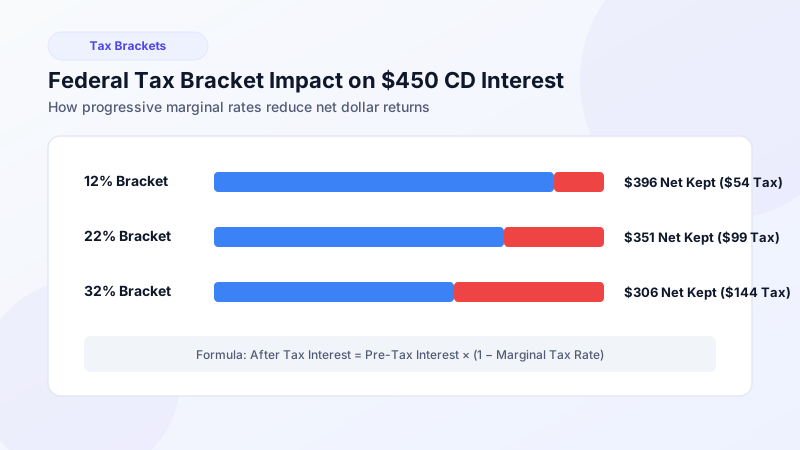
Using the $450 example above with a hypothetical 22% federal tax bracket: $450 × (1 - 0.22) equals $351 in after-tax earnings. That’s a meaningful reduction, roughly $99 lost to taxes on this single year of interest.
| Pre-Tax Interest | Tax Rate | After-Tax Interest |
|---|---|---|
| $450 | 12% | $396 |
| $450 | 22% | $351 |
| $450 | 32% | $306 |
How Federal Taxes Can Affect CD Returns
Federal taxes apply to CD interest based on your overall income tax bracket. Since tax brackets are progressive, your actual rate on this interest depends on your total taxable income, not just the CD earnings alone. Someone in a higher bracket loses proportionally more of their CD interest to federal taxes than someone in a lower bracket.
When State Taxes May Also Reduce Your Earnings
Beyond federal taxes, many states also tax interest income, further reducing your net return. State tax rates vary considerably, and a handful of states impose no income tax at all, meaning residents there keep 100% of their CD interest at the state level.
If you live in a state with income tax, factor in that additional percentage alongside your federal rate for a more complete after-tax picture.
How to Compare Pre-Tax and After-Tax CD Returns
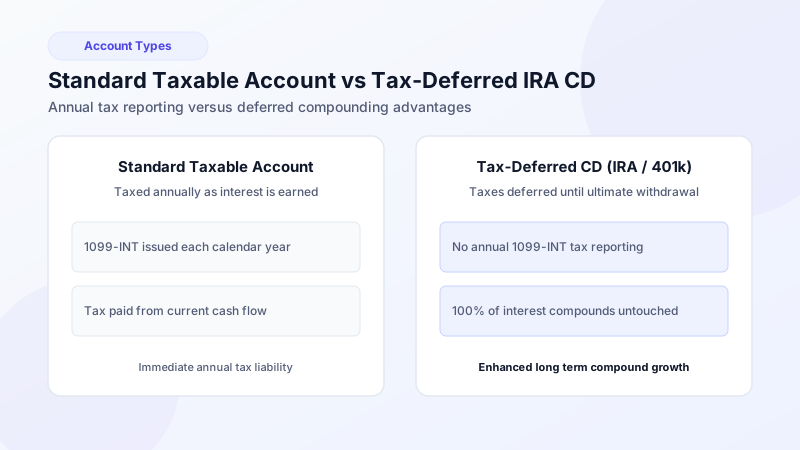
Comparing CDs purely on advertised rate can be misleading once taxes enter the picture, especially if you’re weighing CDs against tax-advantaged accounts. A CD held inside a tax-advantaged retirement account, for instance, may not face the same immediate tax drag as one held in a standard taxable account.
| Account Type | Tax Treatment of CD Interest |
|---|---|
| Standard taxable account | Taxed annually as earned |
| Tax-deferred retirement account | Taxes typically deferred until withdrawal |
How Tax Brackets Can Affect a Simple Estimate
For a quick, rough estimate, use your marginal tax rate, the rate applied to your last dollar of income, rather than your average effective rate. This tends to slightly overestimate the tax hit but provides a conservative, safer planning figure since it won’t leave you surprised by a larger-than-expected tax bill.
How to Use an After-Tax CD Calculator Without Overestimating Your Return
When using any online after-tax CD calculator, double-check which tax rate it assumes by default. Some tools use a flat estimate rather than your specific bracket, which can distort results. Always input your own known federal and state rates rather than relying on generic defaults for an accurate personal estimate.
Conclusion: Estimating Your CD Return After Taxes
Taxes meaningfully reduce the real-world value of CD interest, sometimes by 20% or more depending on your bracket. Calculating your true after-tax return, rather than just the advertised rate, gives you a far more accurate picture of what a CD actually delivers. This article provides general educational information; it isn’t tax or financial advice, and a qualified tax professional can give guidance specific to your situation.
Ready to Calculate Your CD Returns?
Use our free CD Calculator to model your deposit, APY, and interest compounding instantly.
Try the CD Calculator